
The World is Changing: Data is Everywhere
In today’s business world, data is ubiquitous. It’s estimated that the world generates roughly 400 million terabytes of data every single day. This data takes many forms, including web scrapes, video data, text data, databases, and data streaming from connected devices. Enterprises have more access to data about their business operations than ever before, and this trend is continuing to accelerate. Data are generated from every customer interaction, from your internal business applications and transactions, and from web-based activities and a myriad of other sources.
What does this mean to your organization?
Many organizations struggle to make sense of all their data and how to effectively harness it. Dealing with our world’s tsunami of raw data and pulling actionable insights from it can be overwhelming. Driving results is a key success factor in today’s fast-moving business world; however, it’s often said that businesses that are unable to use their data effectively will be left behind by their competitors.
Dealing with today’s onslaught of data requires that enterprises acquire, store, curate, analyze, and visualize the story told by their data to effectively support their decision-making and automation efforts. Without a defined data strategy, this undertaking can be disorganized, daunting, and lead organizations down an expensive and wasteful path.
How can I make sense of my Data?
A well-designed data and analytics strategy can be your guide for how to focus your limited resources on the projects and activities most likely to drive the business results that you need and expect. Building and maintaining a solid strategy is an ongoing endeavor that will organize your data-related activities and help you extract the value from your data.
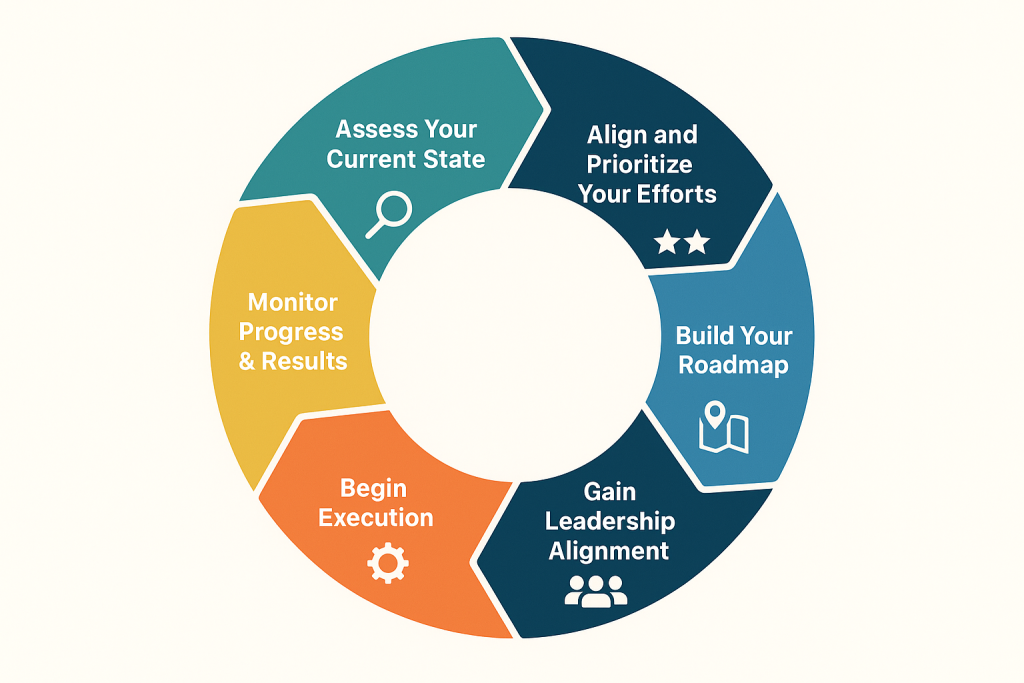
- Identify Your Objectives – Develop a shared understanding of your critical business objectives and where data can be applied to assist, as the foundation of your data strategy. A clear view of where your opportunities and challenges exist and how they relate directly to your business plans is essential to guide the development of a robust data and analytics strategy.
- Assess Your Current State – It’s essential to have a robust view of your current data environment. This includes sources being ingested, data engineering pipelines, persistence layer technologies in use, governance and security practices and policies, platforms in use, and solutions built on these assets. This current state assessment provides the starting point and foundation for your future state roadmap.
- Align and Prioritize Your Efforts – There is no doubt that every organization can identify significant value generation opportunities based on its data. It is key that these opportunities are aligned to your most critical business priorities and to your current data landscape. Prioritization of these opportunities, based on value potential, resource availability, and data accessibility, is a key step toward the development of a viable data strategy roadmap.
- Build Your Roadmap – Your data strategy roadmap defines the sequence of projects that must be executed to realize the value potential for your business. These projects should be sequenced based on priorities and available budgetary and human resources. The roadmap defines the data strategy implementation plan for the organization.
- Gain Leadership Alignment – Development and implementation of a robust data strategy is a significant investment for organizations of any size. It requires an investment of both financial resources and time from functional subject matter experts in the organization, who are typically in high demand. The plan must be supported by senior leadership of the organization to ensure that the investments align with the organization’s financial objectives and that broad cross-functional support is available.
- Begin Execution – Once leadership alignment has been achieved, it’s time to begin implementation of the projects defined in the roadmap. This will require good project and program management oversight along with the establishment of a robust communication plan, keeping the organization’s stakeholders appropriately informed of progress and value delivered.
- Closely Monitor Progress & Results – Projects included in the roadmap must be monitored for progress, issue management, and value delivery so that issues are quickly identified and resolved. It is essential that this monitoring include capture of value delivery and a continuous feedback mechanism, providing information to the assessment and planning phases so that the strategy and corresponding roadmap can be periodically adjusted based on implementation progress and changing business conditions.
Clarity Data Consulting can help!
If your organization is struggling to make sense of today’s rapidly changing data and analytics environment or to derive value from the wealth of your available data, a data and analytics strategic plan will help you make informed decisions and stay ahead of your competitors and stakeholder expectations during these unprecedented times of change.
Clarity Data Consulting can help you with a well-organized and strategic approach to efficiently harvesting the vast value potential from your data!
Contact us now to schedule a complimentary, no-obligation initial discussion.